This course has now taken place, but we will be running it again during 2026.
In the meantime, we are able to offer aircraft photography training on a 1 to 1 or bespoke basis. Please contact us to discuss your requirements.
You can also see details of all the other landscape and beginners’ photography courses we are currently running here.
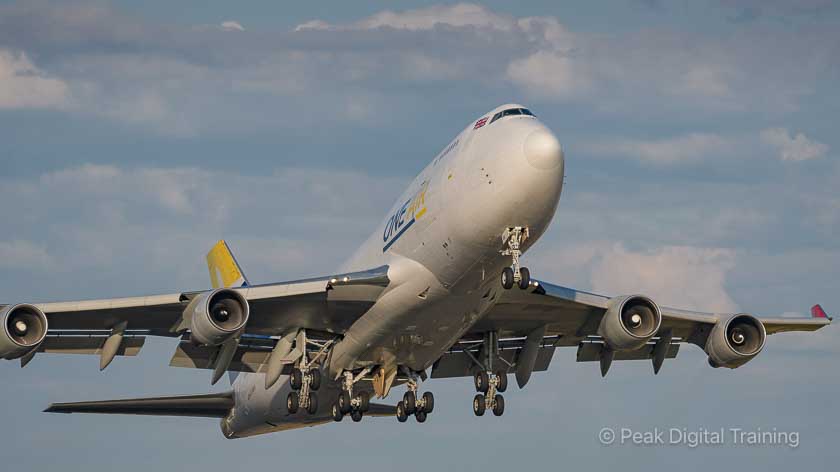
Photographing aircraft in flight is not only great fun, but it can result in some really spectacular images. Any type of action photography does however require some specific skills and understanding of camera settings for the best results. On this afternoon and evening aviation photography course at East Midlands Airport, we will be starting with some relatively easy subjects (large jet airliners in good light), before trying our skills on some smaller aircraft and pictures in lower light conditions during the evening. On this course, you will learn how to:
- choose the correct shutter speeds to either freeze motion, or allow some motion blur
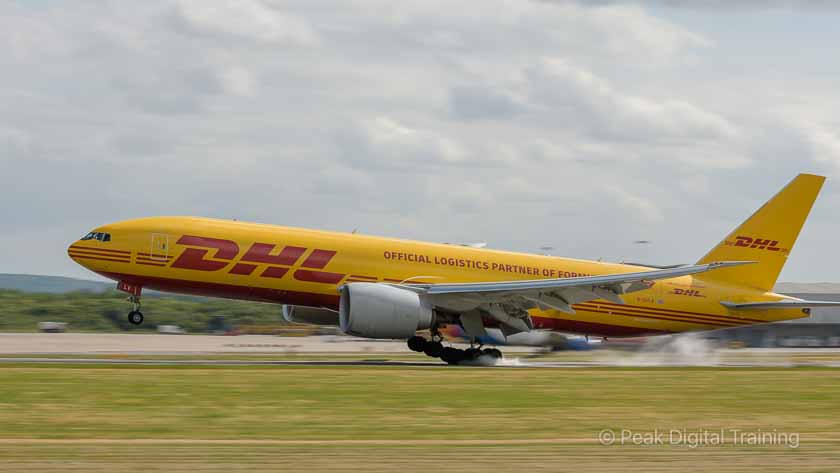
- using panning techniques to increase the impression of movement and speed, and help blur out distracting backgrounds
- choose the correct autofocus settings for really sharp results with moving subjects
- take action photos in low light conditions (sunset will be about 45 minutes before the end of the course)
- plan your shooting locations and camera angles to help you get the best results in different lighting conditions and at different times of the day
- get optimum results with telephoto lenses
The knowledge you will gain on this course will not only be applicable to photographing aircraft, but also to other types of action photography – especially wildlife, pets, and sports photography (especially motorsports).
As this is an intermediate, rather than beginners’ level course, it is important that you are already familiar with the basics of photography and how to use your camera in other than the “all-automatic” mode. If you are not confident about how to use shutter speeds, lens apertures and ISO to control exposure, please consider one of our beginners’ digital photography courses where we teach those skills.
This one day aviation photography workshop is taking place at East Midlands Airport, which has some excellent viewpoints for photographing the aircraft. The airport itself is conveniently located next to the M1 motorway, and Sheffield, Derbyshire, Nottinghamshire and Leicestershire are all within easy reach. There are also good public transport links by bus and rail from Derby and Nottingham.
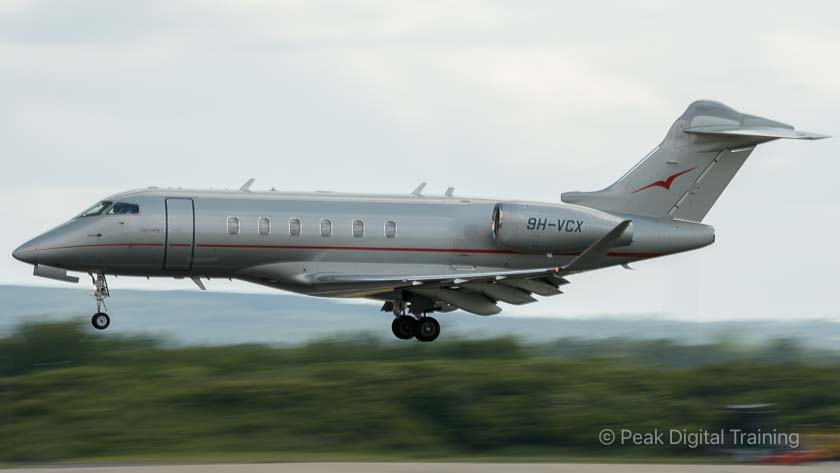
East Midlands is the second busiest cargo airport in the UK, and our course is being held on a Thursday (which is the busiest day of the week). We will hopefully have a variety of aircraft types to photograph – from large and small jet airliners and cargo aircraft to turboprop aircraft, business jets and light aircraft. The course will start in the afternoon, and continue until after sunset – which should allow us to get some great shots in “golden hour” light, at sunset and also during “blue hour”.
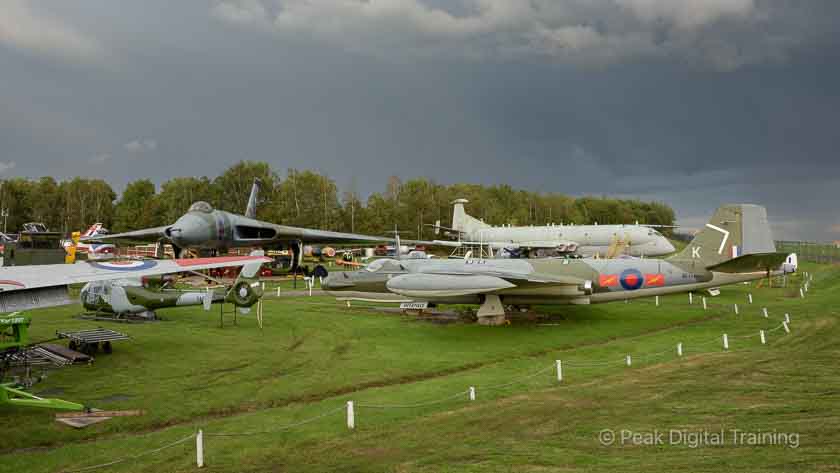
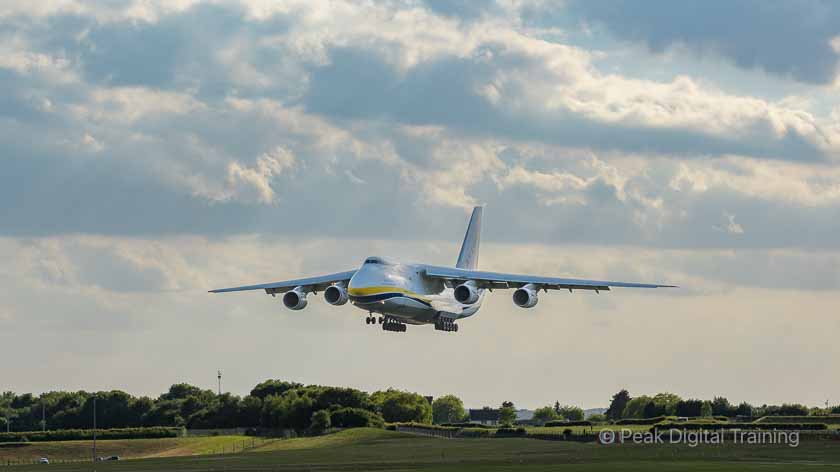
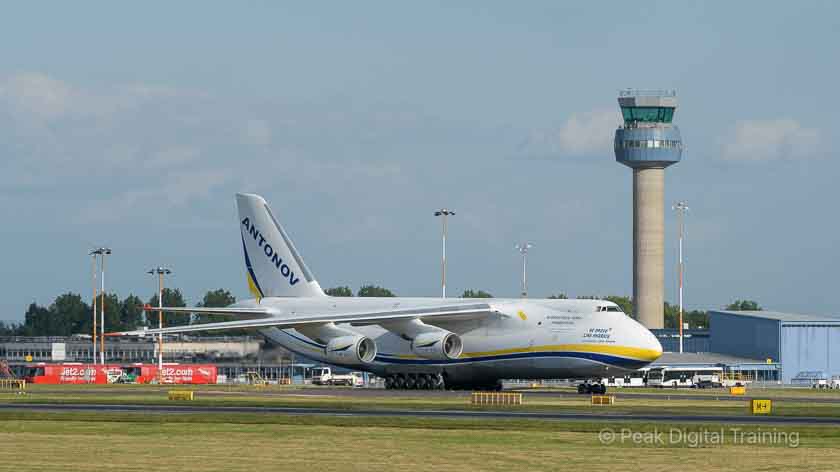
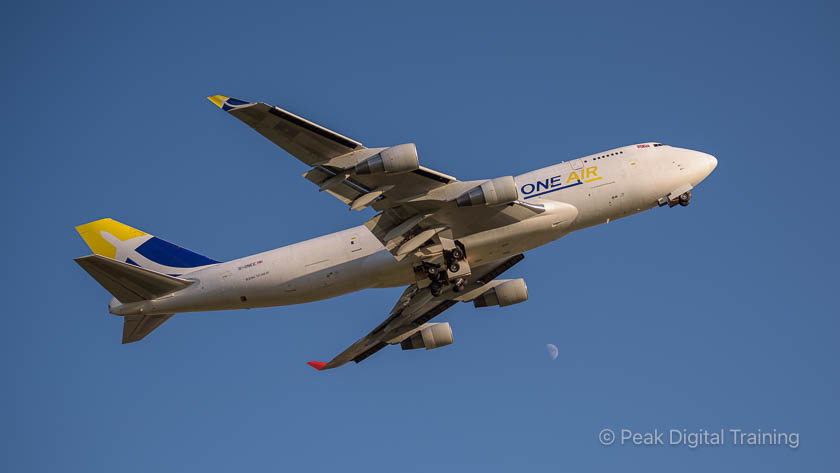
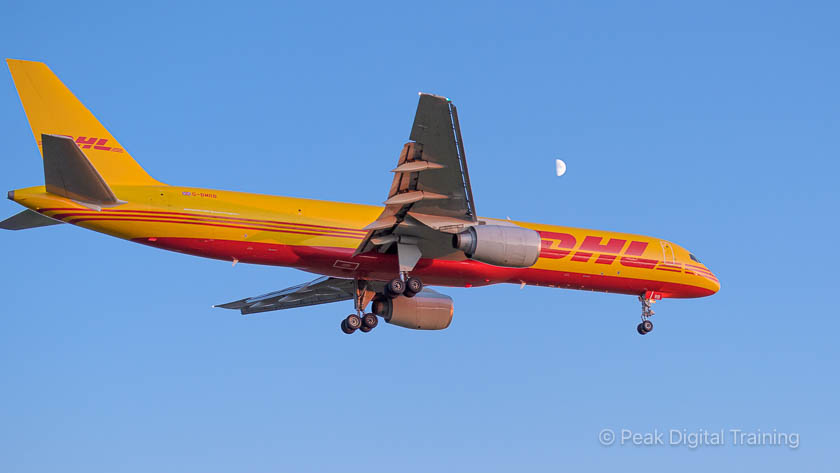
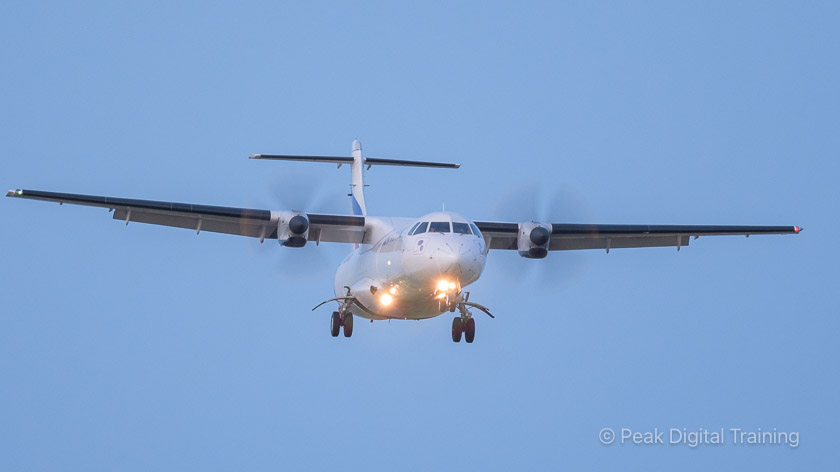
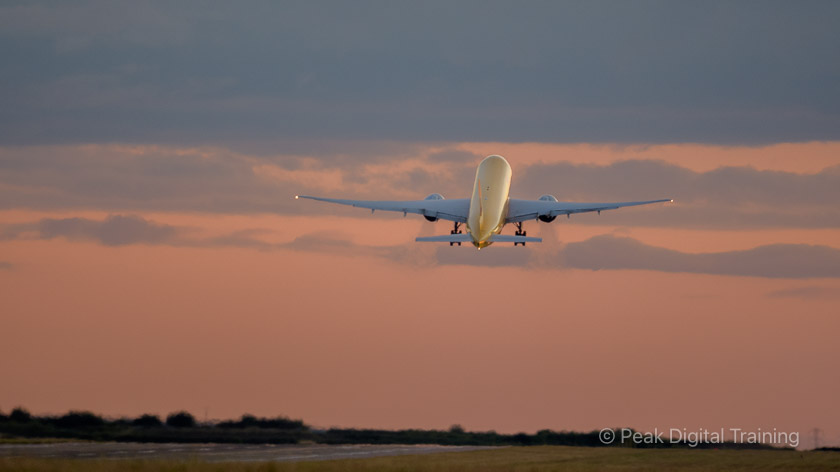
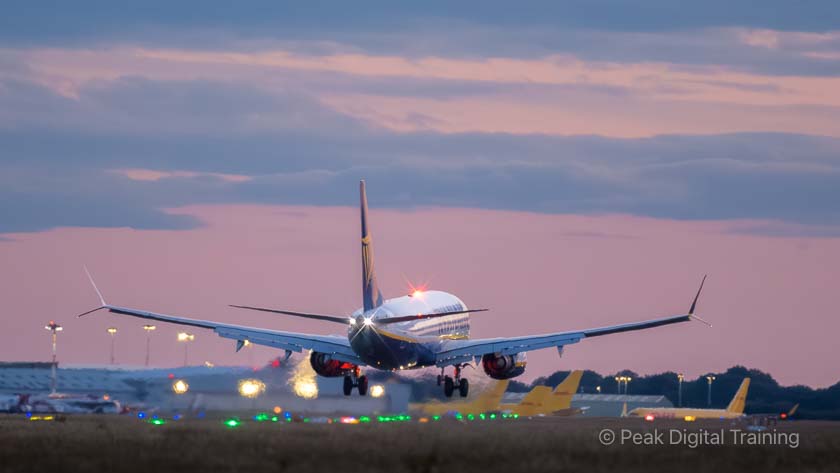
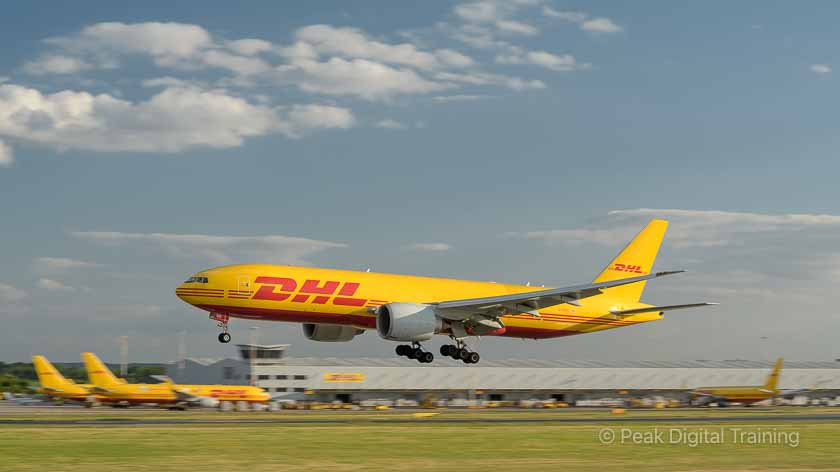
The Aeropark also has a collection of nearly 30 complete post-WW2 aircraft (including a Vulcan bomber) on display outside, which we can photograph in addition to the arrivals and departures at the airport. A full list of the Aeropark’s aircraft can be seen here. On the day of our workshop, the Aeropark has special late evening opening until 9.00pm.
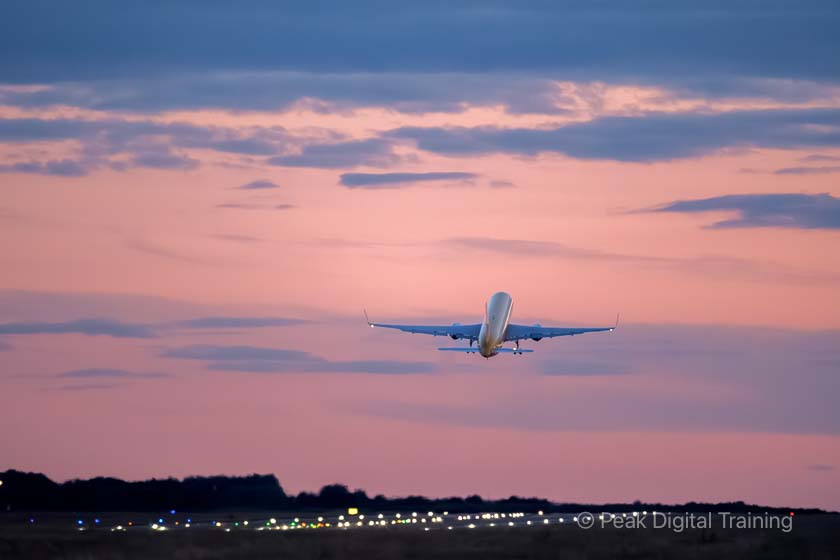
The other location that we are most likely to use is down at the other end of the runway, where aircraft coming in to land are heading directly into the evening sun. They are so low at this point that you don’t even need a telephoto lens to get full frame shots of them, and the views of the flight path are unobstructed by trees or fences. Planes taking off are heading into the sunset from here, so it is a great location towards the end of the day when the airport lights are twinkling.
The excellent viewing points at the airport mean that you do not need a top-of-the-range camera or big, expensive lenses for this course. Any sort of interchangeable-lens camera (DSLR or mirrorless) with a zoom lens which goes up to 200mm or 300mm is ideal, but bridge cameras should also be fine. Please contact us for advice if you are unsure whether your camera is suitable. A wide angle or kit zoom lens will also be very useful for close shots of aircraft landing or the exhibits at the Aeropark. The only other equipment that will be needed is a tripod for when the light levels drop in the evening. But don’t worry if you haven’t got one, as we have some that we can lend you if you don’t already own one of your own.
There will be very little walking required on this course, as we can park very close to the viewing areas that we’ll be using – also useful if we need to shelter from any rain showers. If there is any heavier rain, we can shelter inside one of the buildings at the Aeropark – where we will also have a chance to review the photos you have taken on the laptop that we will be bringing along.
Please contact us to request a booking form.